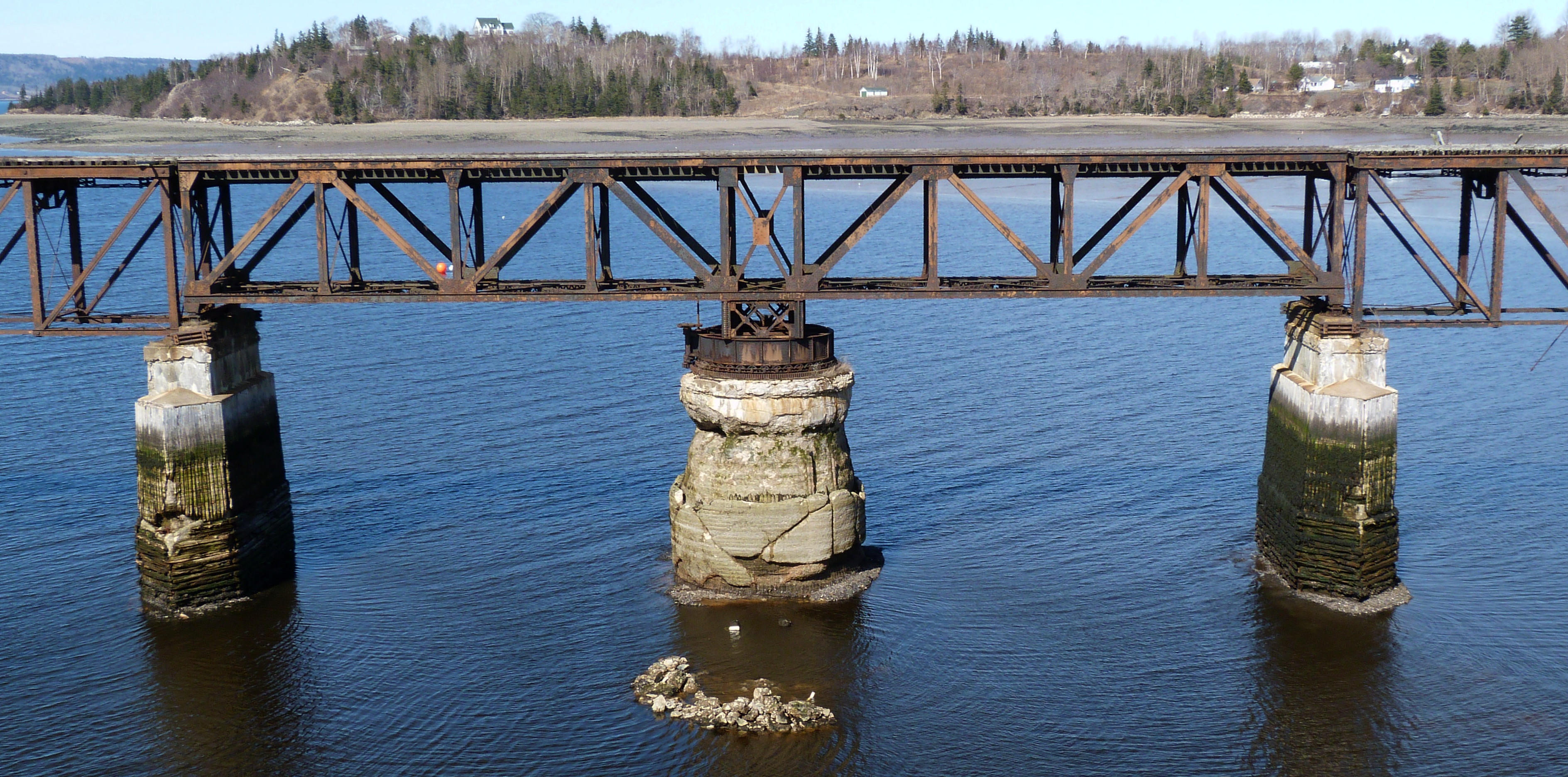
Dominion Atlantic Railway Bear River Bridge
17 March 2012 3:08pm ADT
The swing span.
The time is about ¼ hour before low tide.
How did the swing span work?
From time to time, the swing span (above) was opened to allow a ship to pass on its way upriver or downriver. The swing span's normal position was “closed” – that is, positioned so that the railway track was continuous all the way across the bridge, to enable train movements as needed in the daily operation of the railway. When a ship arrived, wanting to pass through the bridge, someone had to go out on the bridge to the swing span, to operate the machinery. The operation of this swing span was always done manually – there was never any steam engine or electric motor to do the work. The railway company employed a person, the bridge tender, who lived close by, to be available at any time as required to open the swing span for a ship and then close it after the ship had passed through. This photograph shows the details of the mechanism that turned the swing span sideways, to open the span to allow a ship to pass, or after a ship had passed to close the span to realign the railway track for the safe passage of trains. When the swing span was closed and locked in place, it was the duty of the bridge tender to visually inspect the alignment of the rails at both ends of the span, before he/she gave the signal to a waiting train crew to proceed.

